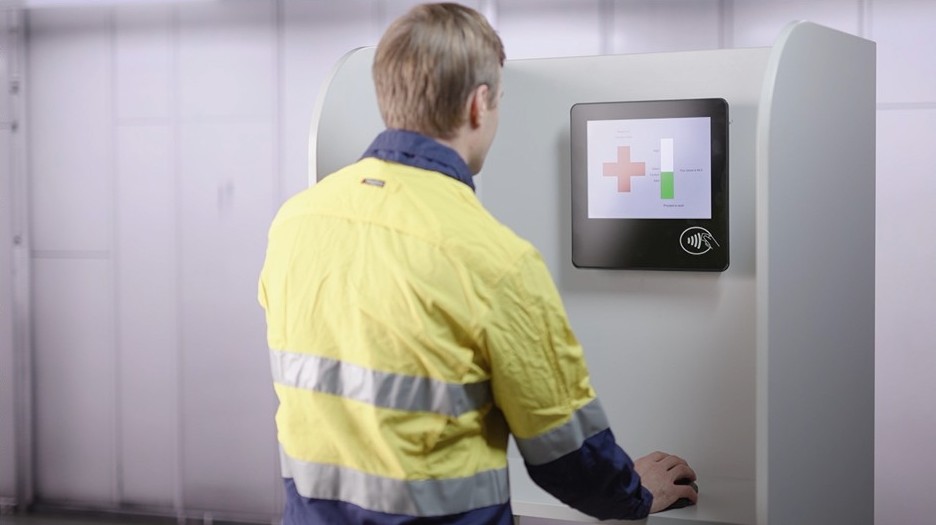


Designed by safety experts for construction, mining, transport, industrial, and other high-risk sectors, OSPAT is a real-time, scientifically validated fitness-for-work and wellbeing solution. It mitigates risk while supporting safety compliance and duty of care.
Importantly, each performance assessment is compared with the employee’s own wellbeing history and previous assessments, rather than against industry or community benchmarks. That makes personal performance trends and impairment easier to identify and address.
Additionally, OSPAT enables data-driven decision-making. Performance trends and analytics can be used to optimise shift planning, rostering and workforce health strategies – to help deliver continuous improvement initiatives in safety culture and human performance management
Using drug and alcohol tests alone ignores many other possible causes of performance impairment – including physical and psychological issues. OSPAT’s performance testing is comprehensive and can be completed daily at no additional cost. OSPAT’s psychomotor tracking test was developed in response to detailed research – to assess the level of impairment, not the cause of impairment.
Armed with the data, employers can determine:
.png)
The OSPAT assessment task requires an unstable cursor to be kept in the centre of a target while the system moves it around randomly. Difficulty is adjusted progressively in response to the employee’s performance. The challenge is similar to driving a car. The employee needs to watch for changes and react appropriately. They’ll be able to do this successfully if in a fit and alert state.
Testing history is used to build a personal profile, with each score compared with past performance to compare results and measure any changes. Analysing the 20 previous assessments builds an understanding of both mean scores and the variation expected.
Employees receive their results immediately and are told to report to their supervisor if there’s an issue. The results are accessed by authorised supervisors too; and all are stored in the OSPAT database for future reference, HR records, audits and analysis.